Case Planning, General

Case Planning for Zirconia Crown and Bridge Cases

Introduction

Zirconia has become one of the most widely used materials in modern restorative dentistry due to its exceptional strength, durability, and natural appearance. Whether fabricating single crowns or multi-unit bridges, successful outcomes depend on more than material selection alone. Careful case planning is the foundation of every predictable zirconia restoration.

Effective case planning allows clinicians and dental laboratories to evaluate clinical conditions, select the appropriate zirconia material, and design restorations that achieve optimal fit, function, and aesthetics. By addressing potential challenges before fabrication begins, dental teams can minimize complications and improve long-term success.

This article explores the essential steps involved in case planning for zirconia crown and bridge cases and explains why a collaborative digital workflow is critical for achieving outstanding restorative results.

Why Case Planning Matters for Zirconia Restorations

Although zirconia is highly durable, successful restorations require careful evaluation before treatment begins. Every patient presents unique anatomical, functional, and aesthetic considerations that influence the final restoration.

Proper case planning helps clinicians:

  • Improve restoration accuracy
  • Select the most suitable zirconia material
  • Achieve optimal aesthetics
  • Reduce chairside adjustments
  • Minimize remakes
  • Increase long-term restoration success

Without comprehensive planning, even high-quality zirconia restorations may experience complications related to fit, occlusion, or appearance.


Comprehensive Patient Evaluation

Every successful zirconia restoration begins with a thorough clinical assessment.

Important factors include:

Oral Health Assessment

Clinicians evaluate:

  • Tooth structure
  • Periodontal health
  • Existing restorations
  • Caries risk
  • Soft tissue condition

Functional Analysis

Understanding the patient’s occlusion and bite dynamics helps determine the appropriate restorative design.

Aesthetic Expectations

Shade selection, smile line, facial symmetry, and patient expectations should all be considered during treatment planning.

This comprehensive evaluation forms the basis for predictable restorative outcomes.


Material Selection

Not all zirconia materials are identical. Selecting the correct type is an important part of successful case planning.

Common zirconia options include:

Monolithic Zirconia

Offers exceptional strength and is ideal for posterior crowns, bridges, and implant restorations.

High-Translucency Zirconia

Provides improved aesthetics for anterior restorations while maintaining excellent durability.

Multilayer Zirconia

Combines natural color gradients with high strength for highly aesthetic restorations.

Material selection should balance strength, translucency, and clinical requirements for each individual case.


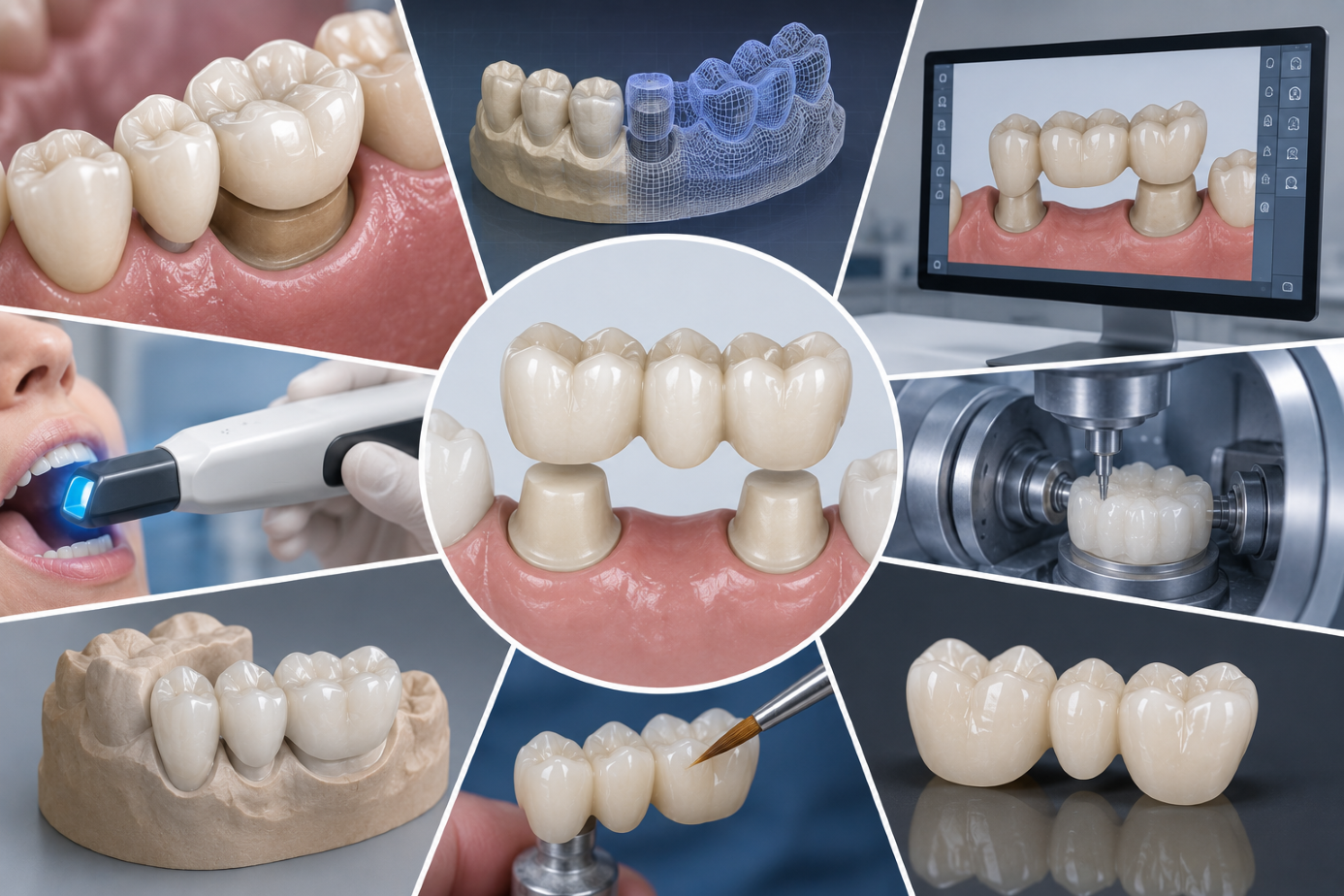
Digital Impressions and CAD/CAM Workflow

Modern digital dentistry has significantly improved zirconia restoration accuracy.

Digital workflows typically include:

  • Intraoral scanning
  • Digital impressions
  • CAD design
  • CAM manufacturing
  • Milling
  • Final finishing

Digital impressions eliminate many inaccuracies associated with conventional impression materials while improving communication between clinics and laboratories.

By integrating CAD/CAM technology into case planning, clinicians achieve greater precision and more consistent restorative results.


Tooth Preparation Considerations

Proper tooth preparation plays an essential role in the success of zirconia crowns and bridges.

Preparation should provide:

  • Adequate material thickness
  • Smooth finish lines
  • Rounded internal angles
  • Proper occlusal reduction
  • Sufficient retention

Inadequate preparation may compromise both the strength and aesthetics of the final restoration.

Close communication between the dentist and laboratory helps ensure appropriate preparation guidelines are followed.


Occlusal Planning

Occlusion directly affects the longevity of zirconia restorations.

Proper planning should evaluate:

  • Bite force distribution
  • Functional movements
  • Bruxism
  • Contact points
  • Vertical dimension

Balanced occlusion reduces excessive stress on restorations and minimizes the risk of chipping or fracture.

Digital occlusal analysis can further improve restorative precision.


Aesthetic Planning

One of zirconia’s greatest advantages is its ability to produce natural-looking restorations.

Successful aesthetic planning includes:

Shade Selection

Accurate shade communication between the clinic and laboratory is essential.

Tooth Morphology

Restorations should match adjacent teeth in shape, contour, and surface texture.

Smile Design

Digital smile design software allows clinicians and patients to visualize expected outcomes before fabrication begins.

Attention to these details greatly enhances patient satisfaction.


The Role of the Dental Laboratory

Dental laboratories are key partners in successful zirconia restorations.

Laboratory technicians contribute by:

  • Designing restorations using CAD software
  • Selecting appropriate zirconia materials
  • Optimizing restoration contours
  • Verifying occlusion
  • Performing quality control inspections

Strong communication between clinicians and laboratories improves restorative precision while reducing production errors.

A collaborative approach is one of the most important elements of successful case planning.


Common Challenges and Prevention

Several issues can affect zirconia crown and bridge success if planning is inadequate.

Potential challenges include:

  • Poor marginal fit
  • Shade mismatch
  • Occlusal discrepancies
  • Inadequate connector dimensions
  • Fracture due to improper design

Most of these complications can be prevented through detailed diagnostics, digital workflows, and careful collaboration between clinicians and technicians.


Future Trends in Zirconia Case Planning

Digital dentistry continues to improve the planning and fabrication of zirconia restorations.

Emerging innovations include:

  • Artificial intelligence-assisted restoration design
  • Advanced facial scanning
  • Improved multilayer zirconia materials
  • Cloud-based laboratory collaboration
  • Automated quality control systems

These technologies are making zirconia restorations more predictable, efficient, and aesthetically pleasing than ever before.


Conclusion

Case planning for zirconia crown and bridge cases is essential for achieving restorations that are functional, durable, and highly aesthetic. From patient evaluation and material selection to digital workflows and laboratory collaboration, every stage contributes to long-term treatment success.

By prioritizing case planning, clinicians and dental laboratories can improve restoration accuracy, reduce complications, and deliver exceptional zirconia restorations that meet the highest clinical and patient expectations. As digital dentistry continues to evolve, comprehensive case planning will remain the key to successful zirconia crown and bridge treatments.

Start Your Case Planning