Dental Clinic, Dental Impressions, Digital Dentistry, General

How Accurate Are Digital Dental Impressions?

Introduction

Digital technology has transformed modern dentistry, and one of its most significant advancements is the use of digital dental impressions. Replacing many traditional impression techniques, digital impressions provide highly accurate three-dimensional representations of a patient’s oral structures. They have become an essential part of restorative, implant, and cosmetic dentistry, helping clinicians and dental laboratories achieve more predictable treatment outcomes.

The accuracy of digital dental impressions plays a critical role in the fit, function, and longevity of dental restorations. By reducing common errors associated with conventional impressions, digital workflows improve efficiency while enhancing patient comfort.

This article explores how accurate digital dental impressions are, the factors that influence their precision, and why they have become the preferred choice in modern dentistry.
What Are Digital Dental Impressions?

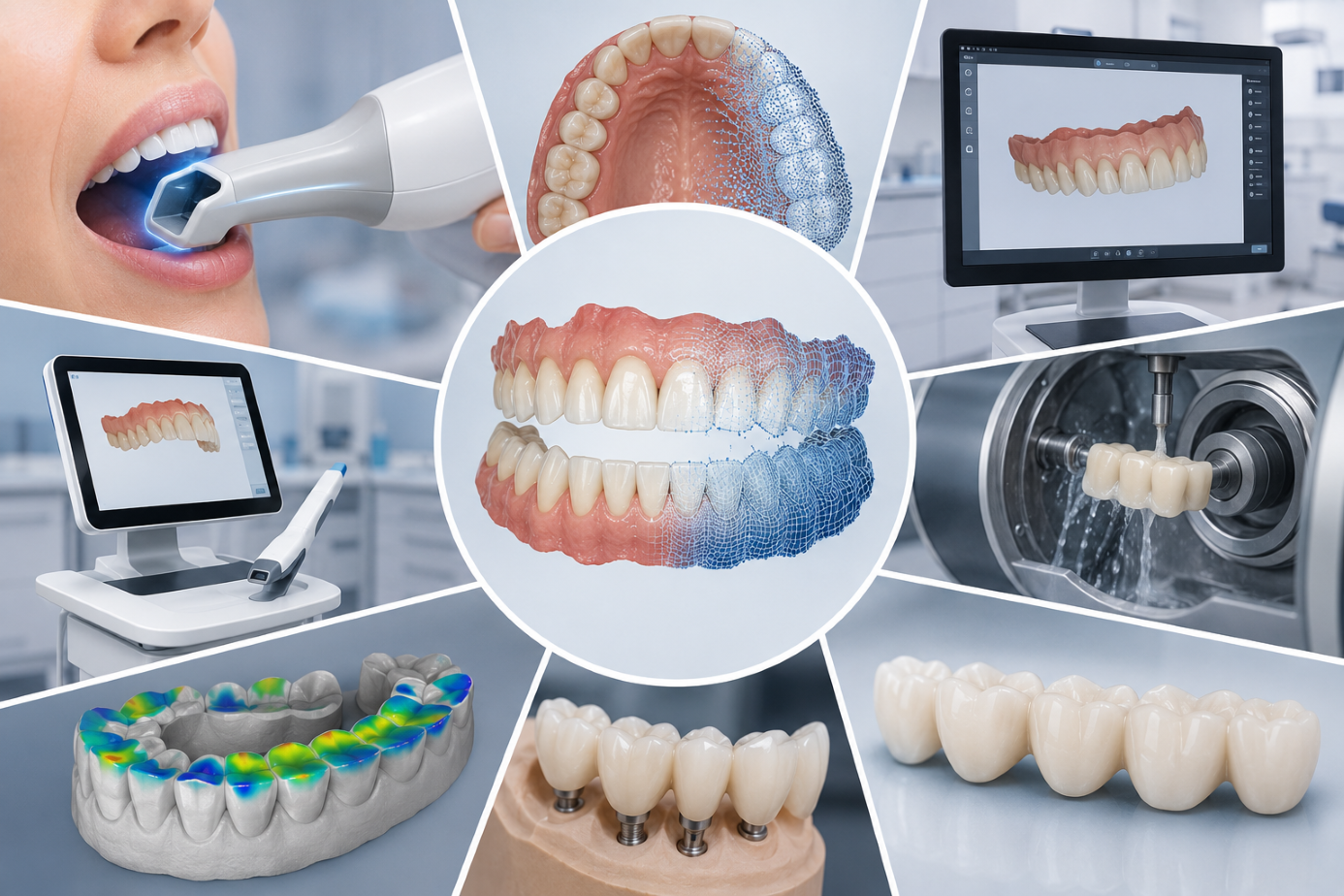
Digital dental impressions are created using an intraoral scanner that captures thousands of images of the patient’s teeth and surrounding tissues. These images are combined into a highly detailed three-dimensional digital model that can be used for diagnosis, treatment planning, and restoration fabrication.

Unlike traditional impression materials, digital impressions eliminate the need for trays, impression paste, and physical stone models.

Common applications include:

  • Dental crowns
  • Bridges
  • Veneers
  • Implant restorations
  • Orthodontic appliances
  • Full-mouth rehabilitations

Because digital files can be shared instantly with dental laboratories, communication and production become faster and more efficient.


How Accurate Are Digital Dental Impressions?

Numerous clinical studies have shown that digital dental impressions provide an exceptionally high level of accuracy for many restorative procedures. Modern intraoral scanners are capable of capturing fine surface details with remarkable precision, resulting in restorations that fit more accurately and require fewer adjustments.

Digital impressions are particularly effective for:

  • Single crowns
  • Short-span bridges
  • Implant-supported restorations
  • Veneers
  • Inlays and onlays

As scanning technology continues to improve, digital impressions are becoming increasingly reliable even for complex restorative cases.


Factors That Influence Accuracy

Although digital systems are highly precise, several factors affect the final accuracy of digital dental impressions.

Scanner Technology

New-generation intraoral scanners produce higher-resolution images and faster data capture than earlier models.

Operator Experience

Proper scanning technique is essential for obtaining complete and distortion-free digital models.

Clinical Conditions

Moisture control, soft tissue management, and adequate visibility contribute significantly to scanning accuracy.

Restoration Type

Simple restorations generally require fewer scanned surfaces than full-arch cases, making them easier to capture with maximum precision.

By understanding these variables, clinicians can consistently achieve highly accurate results.


Advantages Over Traditional Impressions

Digital dental impressions offer several advantages compared to conventional impression techniques.

Greater Precision

Digital scanning minimizes many of the distortions associated with impression materials.

Improved Patient Comfort

Patients no longer need bulky impression trays or impression materials that may trigger gag reflexes.

Faster Workflow

Digital files are transferred instantly to dental laboratories without shipping delays.

Reduced Remakes

More accurate impressions lead to restorations that require fewer adjustments and remakes.

Better Communication

Clinicians and laboratory technicians can review digital files together before fabrication begins.

These advantages contribute to more predictable restorative outcomes and improved clinical efficiency.


Digital Impressions in Implant Dentistry

Implant restorations demand exceptional accuracy because even minor discrepancies may affect the passive fit of the final prosthesis.

Digital dental impressions have become increasingly popular in implant dentistry because they provide:

  • Accurate implant position capture
  • Better soft tissue visualization
  • Improved prosthetic planning
  • Faster communication with dental laboratories
  • Reduced chairside adjustments

Combined with CAD/CAM technology, digital impressions help produce implant restorations with excellent precision and long-term stability.


The Role of CAD/CAM Technology

Digital impressions serve as the foundation of modern CAD/CAM workflows.

Once scanning is complete, the digital model is transferred into specialized design software where technicians create customized restorations.

The workflow includes:

  • Digital scanning
  • Computer-aided design (CAD)
  • Computer-aided manufacturing (CAM)
  • Milling or 3D printing
  • Quality verification

This fully digital process minimizes manual errors and increases consistency throughout restoration production.


Benefits for Dental Laboratories

Dental laboratories also benefit significantly from digital impression technology.

Advantages include:

  • Immediate file transfer
  • More accurate restoration design
  • Reduced production errors
  • Improved communication with clinicians
  • Greater workflow efficiency

Digital impressions allow technicians to begin restoration design sooner while maintaining high levels of precision.


Are There Any Limitations?

Although digital impressions are highly accurate, certain clinical situations may still present challenges.

These include:

  • Extensive edentulous arches
  • Limited mouth opening
  • Heavy saliva flow
  • Poor soft tissue visibility
  • Extremely complex restorative cases

However, ongoing advancements in scanner technology continue to reduce these limitations and expand the clinical applications of digital workflows.


The Future of Digital Dental Impressions

Digital dentistry continues to evolve rapidly, and intraoral scanning technology is becoming even more sophisticated.

Future developments may include:

  • Artificial intelligence-assisted scanning
  • Faster image acquisition
  • Improved full-arch accuracy
  • Enhanced soft tissue capture
  • Seamless cloud-based collaboration

These innovations will further improve restorative precision and treatment predictability.


Conclusion

Digital dental impressions have become one of the most accurate and reliable tools in modern dentistry. Their ability to capture detailed three-dimensional images improves restoration fit, streamlines communication, and enhances patient comfort.

From single crowns to implant-supported restorations, digital dental impressions provide exceptional precision while supporting efficient CAD/CAM workflows. As technology continues to advance, they will remain an essential component of high-quality restorative and implant dentistry.

Start Your Case Planning