New Jersey, USA


Introduction
Dental implants have become one of the most predictable and successful treatment options in modern dentistry. However, like any restorative procedure, implant restorations can occasionally present complications that affect function, aesthetics, or long-term success. Understanding these challenges and implementing effective solutions is essential for dentists, dental technicians, and patients alike.
Successful implant treatment depends on accurate planning, precise restoration design, proper maintenance, and strong collaboration between the dental clinic and laboratory. By identifying potential issues early, clinicians can reduce risks and improve treatment outcomes.
This article explores the most common implant restoration complications and the practical solutions used to address them.
Why Implant Restoration Complications Occur
Although implant restorations have high success rates, complications may occur due to several factors, including:
- Inaccurate treatment planning
- Poor implant positioning
- Occlusal overload
- Inadequate oral hygiene
- Prosthetic design issues
- Material failures
- Lack of regular maintenance
Recognizing these risk factors helps clinicians prevent many implant restoration complications before they develop.
Screw Loosening
The Problem
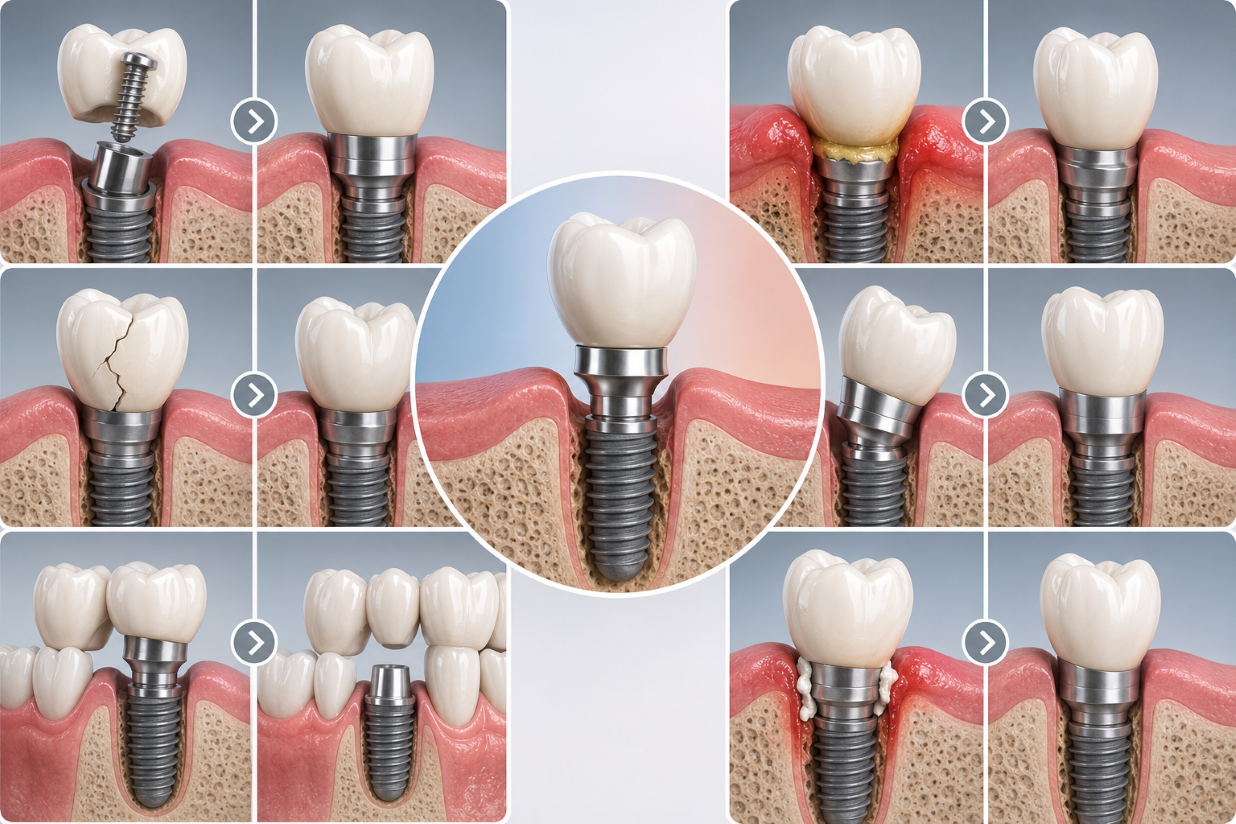
One of the most common implant restoration complications is screw loosening. This occurs when the retaining screw gradually loses preload, causing the restoration to become unstable.
Common causes include:
- Improper torque application
- Occlusal overload
- Poor implant angulation
- Component misfit
The Solution
Preventing screw loosening requires:
- Following manufacturer torque recommendations
- Verifying passive fit
- Correcting occlusal discrepancies
- Scheduling routine maintenance appointments
Modern digital workflows also help reduce implant restoration complications by improving restorative precision and fit.
Peri-Implant Inflammation
The Problem
Inflammation around implants is one of the most serious implant restoration complications. If left untreated, it may progress to peri-implantitis and lead to bone loss.
Common causes include:
- Poor oral hygiene
- Residual cement
- Plaque accumulation
- Inadequate maintenance
The Solution
Treatment typically involves:
- Professional cleaning
- Improved oral hygiene protocols
- Removal of excess cement
- Regular monitoring of peri-implant tissues
Early intervention is critical for managing implant restoration complications related to soft tissue health.
Implant Crown Fractures
The Problem
Restorative materials can occasionally fracture under excessive functional forces. Crown fractures represent one of the more visible implant restoration complications and can negatively impact patient satisfaction.
Contributing factors may include:
- Bruxism
- Material selection errors
- Poor occlusal design
- Excessive bite forces
The Solution
To minimize fracture risks:
- Select appropriate restorative materials
- Design proper occlusion
- Use night guards for bruxism patients
- Perform regular follow-up evaluations
Proper laboratory planning significantly reduces implant restoration complications related to restoration durability.
Poor Aesthetic Outcomes
The Problem
Even when implants function correctly, aesthetic concerns can affect treatment success. Common aesthetic implant restoration complications include:
- Improper crown shape
- Shade mismatch
- Gingival recession
- Visible implant components
These issues are particularly important in the anterior region.
The Solution
Achieving optimal aesthetics requires:
- Comprehensive treatment planning
- Accurate digital smile design
- Effective communication with the laboratory
- Careful soft tissue management
Advanced digital technologies can help prevent implant restoration complications that impact aesthetics.
Occlusal Problems
The Problem
Improper bite relationships can create excessive forces on implant restorations. Unlike natural teeth, implants lack periodontal ligaments and cannot absorb forces in the same way.
Potential consequences include:
- Component wear
- Screw loosening
- Restoration fractures
- Patient discomfort
These are among the most frequently encountered implant restoration complications in long-term cases.
The Solution
Clinicians should:
- Carefully evaluate occlusion
- Adjust contacts when necessary
- Monitor patients regularly
- Use digital occlusal analysis when available
Balanced force distribution greatly reduces restorative complications.
Implant Misfit and Passive Fit Issues
The Problem
A poor fit between the restoration and implant components may create mechanical stress throughout the prosthetic system.
Consequences can include:
- Screw loosening
- Component fractures
- Long-term instability
The Solution
To ensure proper fit:
- Use highly accurate digital impressions
- Verify frameworks before delivery
- Employ CAD/CAM technology
- Conduct thorough quality control procedures
Precision manufacturing plays a key role in preventing implant restoration complications related to misfit.
Residual Cement Problems
The Problem
Cement-retained restorations can leave excess cement beneath the gums, leading to inflammation and peri-implant disease.
Residual cement remains one of the most preventable implant restoration complications.
The Solution
Clinicians should:
- Use minimal cement volumes
- Remove excess cement thoroughly
- Consider screw-retained restorations when appropriate
- Schedule regular maintenance visits
Careful cementation protocols can significantly reduce biological complications.
Material Wear and Component Failure
The Problem
Over time, restorative materials and implant components may experience wear or mechanical fatigue.
Potential issues include:
- Abutment wear
- Ceramic chipping
- Framework fractures
- Component degradation
These long-term implant restoration complications may require repair or replacement.
The Solution
Reducing material-related failures involves:
- Selecting high-quality materials
- Proper case planning
- Routine clinical evaluations
- Timely replacement of worn components
Long-term maintenance remains essential for implant success.
The Importance of Digital Dentistry
Modern digital dentistry has significantly reduced the frequency of implant restoration complications by improving accuracy and predictability.
Digital tools help clinicians achieve:
- More accurate implant planning
- Better prosthetic fit
- Improved communication with laboratories
- Enhanced aesthetic outcomes
- More efficient workflows
Technologies such as intraoral scanners, CAD/CAM systems, and digital implant planning software continue to improve restorative success rates.
Conclusion
While dental implants are highly successful, implant restoration complications can occur when planning, design, maintenance, or restorative protocols are compromised. Common challenges include screw loosening, peri-implant inflammation, crown fractures, occlusal issues, and aesthetic concerns.
Fortunately, most implant restoration complications can be prevented or successfully managed through careful treatment planning, digital technology, high-quality laboratory support, and ongoing maintenance. By addressing problems early and implementing effective solutions, dental professionals can ensure long-term implant success and patient satisfaction.