Case Planning, Dental Clinic, General

Case Planning for Full-Arch Implant Restorations

Introduction

Full-arch implant restorations have transformed the way clinicians treat patients with extensive tooth loss. By providing a fixed, functional, and aesthetically pleasing solution, full-arch restorations can significantly improve quality of life. However, achieving predictable long-term success requires careful preparation before treatment even begins. This is where case planning becomes essential.

Successful case planning helps clinicians evaluate patient needs, identify potential challenges, and develop a comprehensive treatment strategy. For full-arch implant restorations, accurate planning is critical because multiple clinical, surgical, prosthetic, and laboratory factors must work together seamlessly.

This article explores the importance of case planning for full-arch implant restorations and outlines the key steps involved in creating successful treatment outcomes.

What Is Full-Arch Implant Restoration?

A full-arch implant restoration is a fixed prosthetic solution designed to replace an entire upper or lower dental arch using multiple dental implants as support.

Common treatment options include:

  • Full-arch zirconia restorations
  • Hybrid prostheses
  • Implant-supported bridges
  • Immediate loading restorations

Because these treatments involve complex restorative and surgical procedures, detailed case planning is necessary to ensure optimal function, aesthetics, and long-term stability.


Why Case Planning Matters

The success of full-arch implant restorations depends on much more than implant placement alone. Every stage of treatment must be carefully coordinated through effective case planning.

Benefits of comprehensive planning include:

  • Improved treatment predictability
  • Better implant positioning
  • Enhanced aesthetics
  • Reduced complications
  • Improved communication between clinicians and laboratories
  • Greater patient satisfaction

Without proper planning, even technically successful implant surgeries may result in prosthetic challenges or compromised outcomes.


Comprehensive Patient Evaluation

The first stage of full-arch treatment begins with a detailed patient assessment.

Key factors include:

Medical History

Understanding systemic health conditions helps identify potential risks that may affect healing and implant success.

Oral Examination

Clinicians evaluate:

  • Remaining teeth
  • Bone volume
  • Soft tissue quality
  • Occlusal relationships
  • Existing restorations

Patient Expectations

Understanding aesthetic and functional goals helps guide treatment decisions throughout the restorative process.

Thorough evaluation forms the foundation of successful full-arch implant treatment.


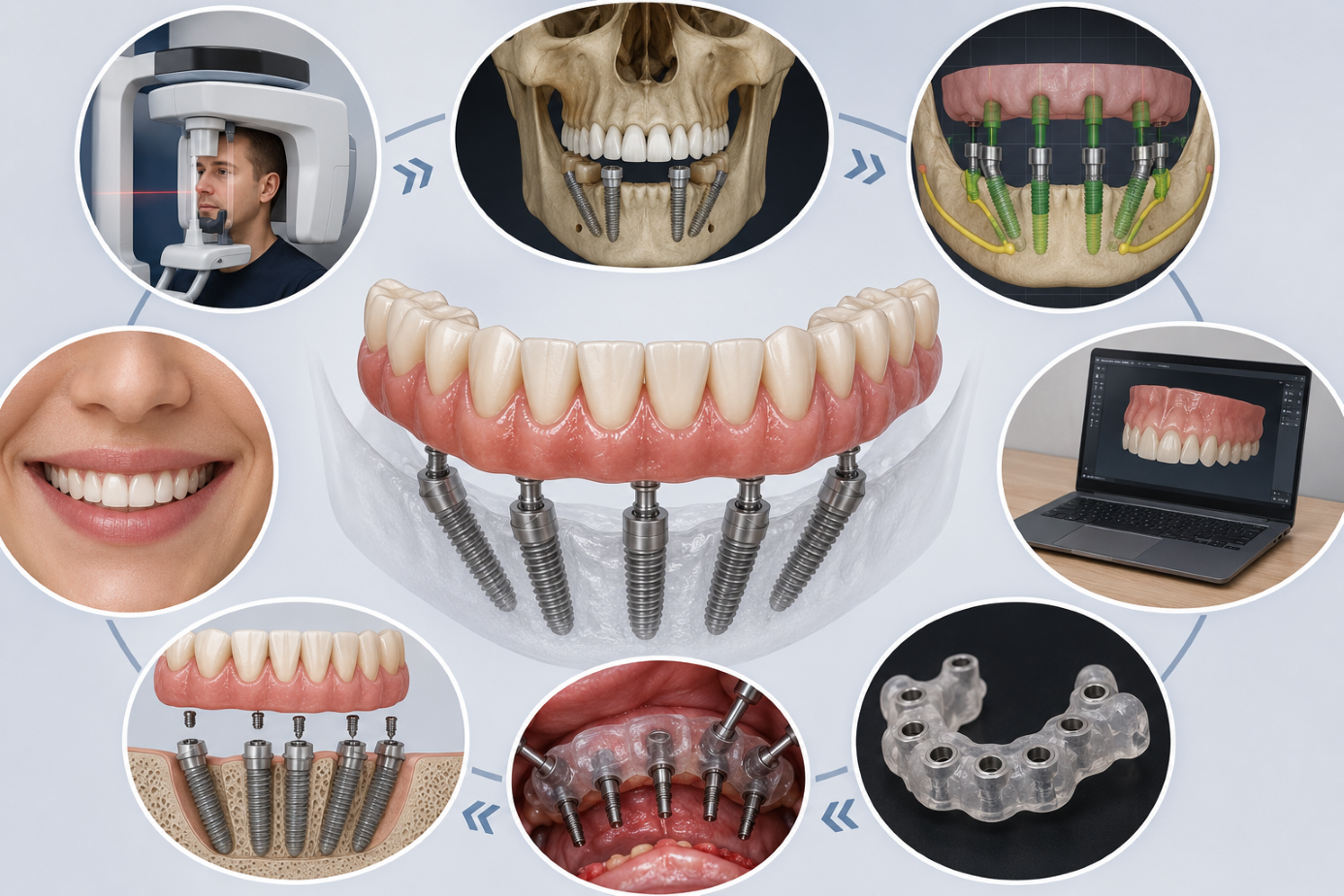
Digital Diagnostics and Imaging

Modern digital technologies have significantly improved treatment predictability for full-arch restorations.

Common diagnostic tools include:

Cone Beam Computed Tomography (CBCT)

CBCT scans provide detailed three-dimensional information about bone anatomy and available implant sites.

Intraoral Scanners

Digital impressions improve accuracy and simplify communication with dental laboratories.

Digital Smile Design

Advanced software allows clinicians and patients to visualize expected outcomes before treatment begins.

These technologies help create more precise and efficient treatment workflows.


Implant Position Planning

Implant placement is one of the most critical aspects of full-arch rehabilitation.

Successful planning must consider:

  • Bone availability
  • Anatomical structures
  • Prosthetic requirements
  • Load distribution
  • Implant angulation

Prosthetically driven implant placement ensures that implants support the final restoration effectively while maintaining aesthetics and function.

Close collaboration between surgeons and restorative teams is essential during this phase.


Prosthetic Design Considerations

The final prosthesis plays a major role in long-term treatment success.

Important considerations include:

Material Selection

Popular materials include:

  • Monolithic zirconia
  • Hybrid prosthetics
  • Titanium frameworks
  • High-performance polymers

Occlusal Design

Proper occlusal planning helps distribute forces evenly across implants and reduces the risk of complications.

Aesthetic Planning

Restorations should provide:

  • Natural tooth proportions
  • Appropriate smile line support
  • Facial harmony
  • Optimal phonetics

These decisions are most effective when integrated into the planning process from the beginning.


The Role of the Dental Laboratory

Dental laboratories are valuable partners in full-arch rehabilitation.

Laboratory teams contribute by:

  • Assisting with digital workflows
  • Designing surgical guides
  • Developing prosthetic prototypes
  • Fabricating final restorations
  • Supporting treatment planning discussions

Effective communication between clinicians and laboratory technicians improves precision and reduces the likelihood of errors.

A collaborative approach leads to more predictable restorative outcomes.


Immediate Loading vs Delayed Loading

One important decision during treatment planning involves determining whether implants will support immediate or delayed restorations.

Immediate Loading

Benefits include:

  • Faster treatment completion
  • Immediate aesthetics
  • Improved patient satisfaction

Delayed Loading

Advantages include:

  • Additional healing time
  • Greater stability in certain cases
  • Reduced biomechanical risks

Selecting the appropriate approach depends on bone quality, implant stability, and overall treatment objectives.


Common Challenges and How Planning Prevents Them

Comprehensive planning helps reduce the risk of complications such as:

  • Implant misalignment
  • Prosthetic misfit
  • Occlusal overload
  • Aesthetic concerns
  • Mechanical failures

Many of these challenges can be prevented through accurate diagnostics, digital workflows, and interdisciplinary collaboration.

Investing time in preparation often saves significant time and resources later in treatment.


Future Trends in Full-Arch Implant Planning

Advancements in digital dentistry continue to improve full-arch rehabilitation.

Emerging technologies include:

  • Artificial intelligence-assisted planning
  • Advanced digital smile design
  • Improved surgical guide systems
  • Enhanced CAD/CAM workflows
  • Fully digital restorative protocols

These innovations are helping clinicians achieve increasingly predictable and efficient treatment outcomes.


Conclusion

Case planning for full-arch implant restorations is a critical step in achieving successful long-term results. From patient evaluation and digital diagnostics to implant positioning and prosthetic design, every aspect of treatment benefits from a structured and collaborative approach.

By prioritizing case planning, clinicians can improve accuracy, reduce complications, enhance aesthetics, and deliver restorations that meet both functional and patient expectations. As digital dentistry continues to evolve, effective case planning will remain the foundation of successful full-arch implant rehabilitation.

Start Your Case Planning